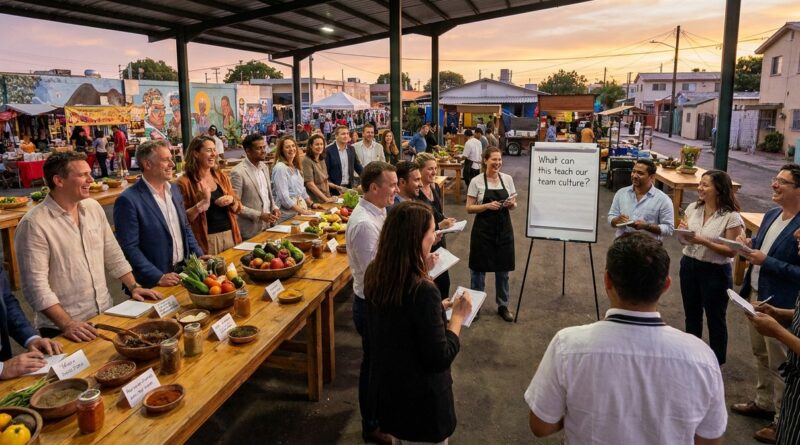
From Offsite To Culture-Soaked Retreat: Why 2026’s Smartest Teams Now Swap Generic Venues For ‘Local Life Labs’
People are worn out by retreats that ask for a lot and give back very little. You fly in, lose two days to travel, sort out childcare, sit under hotel ballroom lights, and end up eating the same rubbery buffet as every other conference group in the building. It is no surprise employees are pushing back. The big shift in post pandemic corporate retreat cultural immersion trends is simple: if a team is going to leave home, the experience needs to feel worth leaving home for. That is why more companies in 2026 are moving away from generic venues and toward what many planners now call “local life labs.” These are retreats built around the culture, people, food, stories, and working style of a place. Done well, they create better team connection, stronger employer brand content, and something finance can actually measure beyond room nights and slide decks.
⚡ In a Hurry? Key Takeaways
- Smart teams are replacing cookie-cutter offsites with culture-rich retreats that feel specific, memorable, and useful.
- Start with one question: what local experience could help your team work, bond, or think differently together?
- The value is not just fun. A well-planned immersion retreat gives HR, finance, and leadership clearer business outcomes and better stories to share.
Why the old offsite model is losing people
The old formula was easy to book. Pick a major city. Reserve a hotel block. Add a ballroom, a keynote, a buffet, maybe a group photo on a rooftop. Done.
It also started to feel lifeless. For distributed teams especially, a retreat is supposed to fix a real problem. People need trust. They need context. They need moments that turn coworkers into actual humans in each other’s minds. A bland hotel setup can handle schedules, but it rarely creates meaning.
That matters more now because employees are looking at the personal cost. Travel is tiring. Parents and caregivers feel it first. Introverts feel it too. If the payoff is “we all sat in rows and watched slides,” people notice.
What a “local life lab” actually means
Think of it as a retreat that uses the destination as part of the program, not just the backdrop.
Instead of one sealed-off venue, the itinerary mixes structured work sessions with guided local experiences that support a business goal. That could mean a neighborhood food walk led by local chefs to spark conversations about customer experience. It could mean a maker workshop with local artists to get product teams thinking about craft, detail, and collaboration. It could mean small-group dinners in family-run spaces where people actually talk, instead of shouting over banquet-room music.
The point is not tourism for its own sake. The point is connection with purpose.
Why this trend is growing in 2026
1. Employees want something real
After years of remote and hybrid work, people can tell when a company is going through the motions. A retreat that reflects a place feels more honest. It says, “We thought about this. We want this time to matter.”
2. Wellness now means less clinical, more social
For a while, corporate wellness often looked like yoga mats, smoothie bars, and breathwork at 7 a.m. That still has a place, but many teams now respond better to shared meals, slower pacing, meaningful conversation, and experiences that make them feel present. Cultural immersion fits that better than a stack of wellness buzzwords.
3. Finance wants proof
Budget owners are asking harder questions. What did the retreat produce? Better retention? Faster team trust? Better content for recruiting? Stronger cross-functional alignment? Generic offsites often struggle to answer that. Culture-forward retreats can do better because the design is more intentional. If you want more on that pressure, From Offsite To Immersion Lab: Why 2026’s Smartest Retreats Turn Destinations Into Live Brand Worlds lays out why companies are being pushed to show outcomes, not just attendance.
What companies get right when these retreats work
They match the experience to the team’s actual need
A retreat should solve something. If the team is new, design for trust and social ease. If morale is low, build in lighter moments and local hosting that feels welcoming. If the team is stuck creatively, use the city and its people to shake up routine thinking.
This is where many retreat plans fail. They copy a trendy format without asking what the group needs most.
They keep work sessions short and useful
No one wants to travel for eight straight hours of presentations they could have watched on Zoom. The best local life labs use compact workshops, then let people process ideas through real-world experiences. That rhythm works better for memory and discussion.
They use local hosts, not just local scenery
A city is not a theme. It is people. The strongest retreats involve chefs, historians, musicians, craftspeople, community guides, or founders who can help a team understand the place from the inside. That is what turns a retreat into a story people remember.
What this looks like in practice
Imagine a distributed marketing team meeting in Oaxaca, Lisbon, or New Orleans. Mornings are for focused planning. Afternoons are split into small hosted experiences tied to the retreat goal. One group joins a neighborhood storytelling walk about identity and place. Another does a cooking session built around collaboration and timing. A third meets local business owners to talk about how brand loyalty really forms in communities.
At dinner, people are not making forced small talk because the day already gave them something to talk about.
That is the hidden advantage here. Shared context makes conversation easier. Easier conversation builds trust faster.
How to plan one without turning it into chaos
Start with outcomes, not activities
Before you pick a destination, write down three things the retreat needs to improve. Be specific. Examples:
Cross-team trust between product and sales.
Stronger onboarding for a newly merged team.
Better employer brand content for hiring.
Now choose experiences that support those outcomes.
Keep the itinerary roomy
The fastest way to ruin a culture-forward retreat is to overschedule it. People need breathing room. Build in walking time, solo reset time, and small-group meals. A packed schedule can make even a beautiful place feel like an airport.
Make participation flexible
Not everyone wants the loudest or most social version of fun. Offer options. A market visit might work for one group. A quiet craft studio or coffee tasting might suit another. Inclusion matters here just as much as novelty.
Respect the place
This should go without saying, but it often gets missed. Work with local partners fairly. Pay people properly. Avoid turning communities into backdrops for content. Teams can tell when something feels extractive instead of respectful.
The business case is stronger than it looks
Some leaders hear “cultural immersion” and worry it sounds soft or vague. In reality, it can create hard value.
You get better retention signals because employees feel the company invested in a meaningful experience. You get stronger recruiting material because photos, stories, and employee reflections feel distinct instead of generic. You get better internal relationships because people spent time in settings designed for conversation, not just compliance.
And perhaps most important, you get a cleaner answer when someone asks, “Why did we do this?”
Common mistakes to avoid
Treating local culture like entertainment filler
If the real program is still just slides in a ballroom, with one token excursion added on, people will see right through it.
Ignoring energy levels
Travel fatigue is real. Build a soft landing on day one. Nobody bonds better after a red-eye, a shuttle delay, and a three-hour kickoff speech.
Forgetting accessibility and caregiving realities
If the experience only works for people with unlimited flexibility, it is not a smart retreat. Give enough notice. Offer different activity levels. Think through dietary needs, mobility needs, and downtime.
At a Glance: Comparison
| Feature/Aspect | Details | Verdict |
|---|---|---|
| Generic hotel offsite | Easy to book, predictable, but often low on energy, memory, and local character. | Fine for logistics. Weak for connection. |
| Culture-soaked local life lab | Blends work with hosted local experiences tied to clear team goals and stronger storytelling. | Best choice when you need trust, creativity, and measurable value. |
| Poorly planned “immersive” retreat | Looks exciting on paper but is overbooked, vague on outcomes, and tiring for attendees. | Avoid. Purpose and pacing matter. |
Conclusion
The smartest retreat trend in 2026 is not bigger stages or fancier buffets. It is specificity. Teams want experiences that feel human, local, and worth the effort of showing up. That helps the community today because travel and wellness trends are moving toward social, cultural, and less clinical experiences, and the same shift is reshaping corporate retreats. Curated, culture-forward itineraries swap passive excursions for co-created moments with local hosts. The result is stronger stories for employer brand, more genuine connection across distributed teams, and a much better answer to finance and HR when they ask what business outcome the retreat actually produced.