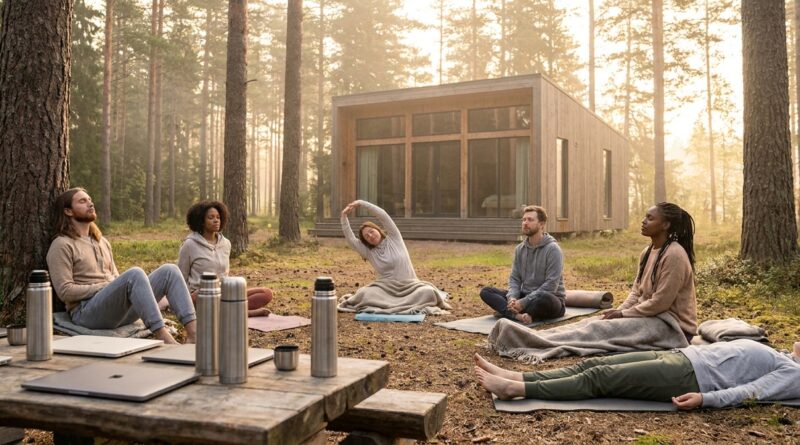
From Offsite To Nervous‑System Retreat: Why 2026’s Smartest Teams Now Design Gatherings To Physically Switch Off Fight‑Or‑Flight
Plenty of teams come back from an expensive offsite more tired than when they left. That is the part leaders often miss. People are already carrying too much. Slack never sleeps, calendars are packed, and hybrid work has trained many employees to stay a little tense all the time. So when a company spends six figures on a retreat filled with panels, forced fun, late dinners, and sunrise team challenges, it can feel less like care and more like another performance test. That is why the smartest planners in 2026 are changing the brief. They are not asking, “How do we make this more exciting?” They are asking, “How do we help people actually come down from high alert?” A post pandemic corporate retreat nervous system reset is not a soft luxury. It is a practical design choice. If people feel safe enough to breathe, rest, and think clearly, you get the thing every offsite claims to want. Better decisions. More honesty. Less resentment.
⚡ In a Hurry? Key Takeaways
- A post pandemic corporate retreat nervous system reset works better than an agenda-packed offsite when your team is already stressed and overstimulated.
- Start with quieter schedules, more privacy, nature, slow movement, and optional wellness sessions instead of nonstop group activities.
- This is not about being trendy. It helps people feel safe and present, which leads to better conversations, clearer thinking, and stronger trust.
Why the old offsite model is starting to fail
The classic company retreat was built for a different time. Get everyone to a nice place. Pack the agenda. Add a keynote, a cocktail hour, maybe a ropes course, and hope morale goes up.
But a lot has changed. People now move between home, office, travel, video calls, and constant notifications with almost no real pause. Even high performers can sit in a permanent low-grade stress state. Their bodies are on alert, even when they look fine on camera.
That is why the usual offsite formula often backfires. You fly people somewhere beautiful, then recreate the same pressure in a prettier setting. There is still too much noise. Too little sleep. Too much social demand. Too much smiling on cue.
And when people do not feel settled in their bodies, they do not suddenly become more creative or more honest because the hotel has better lighting.
What a nervous-system retreat actually means
This does not mean turning your leadership event into a spa weekend with no business purpose. It means designing the gathering around one basic fact. Stressed humans do not collaborate well.
A nervous-system retreat is built to help people shift out of fight-or-flight and into a calmer, more regulated state. That can include breathwork, quiet mornings, slow movement, sound baths, walking meetings, outdoor time, better sleep windows, softer lighting, less alcohol, and fewer back-to-back sessions.
It also means respecting privacy. Not everyone wants to process emotions in a circle with coworkers. Not everyone finds group karaoke healing. Some people reset by being with others. Some reset by getting an hour alone with no expectations.
What changes in practice
The big shift is from stimulation to regulation. Instead of asking how to keep energy high every minute, planners ask how to create enough calm for real engagement to happen.
That often means:
- Shorter agendas
- Longer breaks
- Optional, not mandatory, wellness activities
- Smaller group discussions
- Quiet spaces with no programming
- Food and sleep schedules that do not punish people
- Less stagecraft and less forced vulnerability
Why this matters in a hybrid world
Hybrid work has solved some problems and created others. People have more flexibility, yes. They also have blurrier boundaries, more screen time, and fewer natural transitions between work and recovery.
That means offsites now carry more emotional weight. For some employees, it is the only time they see their team in person all quarter. For others, it is a stressful disruption to a carefully managed routine. If the event ignores that tension, people feel it.
When you frame a gathering as a nervous-system reset, you send a different message. You are saying this is not just about extracting ideas from you in a scenic location. It is about helping you feel grounded enough to think, speak, and connect like a human being.
What leaders get wrong about “energy”
Many leaders still confuse visible excitement with success. Loud rooms. Packed sessions. Late-night bonding. Big applause. Those things can look good in photos.
But they are not the same as trust.
The most useful offsite moments are usually quieter. A conversation that finally gets honest. A disagreement handled well. A team member admitting what is not working. A leader listening without rushing to defend.
Those moments are much more likely when people are not overstimulated and exhausted.
If you also want the retreat to produce something measurable, this approach can work well alongside a more structured insight format like From Offsite To Data-Story Retreat: Why 2026’s Smartest Teams Now Turn Company Gatherings Into Live Insight Labs. The point is not to choose calm or clarity. It is to realize calm often comes first.
How to design a better retreat without making it weird
You do not need crystal bowls in every room. You need good design choices.
1. Cut the agenda by more than you think
If every hour is programmed, there is no room for nervous systems to settle. Leave space. Real space. Not “free time” hidden between two mandatory events on opposite sides of the property.
2. Make some activities optional
Optional means optional. If someone skips morning breathwork or an evening social event, it should not hurt them politically. That is how you build psychological safety into the schedule itself.
3. Choose venues with quiet built in
Nature helps. So does distance from traffic, conference crowds, and noise. Look for walking paths, private corners, outdoor meeting spots, and rooms people can actually sleep in.
4. Stop treating late nights as culture
One of the quickest ways to ruin a retreat is to exhaust people in the name of bonding. Protect sleep. Start later. End earlier. Adults think better when they are rested. This is not a mystery.
5. Reduce performance theatre
Not every session needs music, breakout games, and public sharing. Sometimes the smartest move is a clear prompt, a small group, and enough silence for people to gather their thoughts.
6. Give people private recovery space
Even extroverts can get fried. Quiet lounges, solo walks, no-phone zones, and unstructured downtime are not dead air. They are what lets people return to the room ready to engage.
What employees actually want now
The loudest trend is not luxury for luxury’s sake. It is relief.
People want fewer crowds. Less pressure to be “on.” More fresh air. Better food. Better sleep. Some want yoga. Some want stretching. Some want to sit under a tree and not make small talk for thirty minutes.
That may sound simple, but simplicity is exactly the point. A stressed team does not need more spectacle. It needs a real downshift.
How to know if your retreat worked
Do not judge success by how busy the schedule looked. Ask better questions after the event.
- Did people feel more honest by day two than day one?
- Did cross-team tension go down, or just get covered over?
- Did people have enough energy to think clearly during key sessions?
- Did anyone leave saying, “I actually feel better than when I arrived”?
- Did the retreat produce decisions people trust, not just slides people nodded at?
If the answers are yes, then the retreat did its job.
At a Glance: Comparison
| Feature/Aspect | Details | Verdict |
|---|---|---|
| Traditional offsite schedule | Back-to-back sessions, group activities, late dinners, little downtime, high social demand | Looks energetic, often leaves people drained and less honest |
| Nervous-system retreat design | Slower pacing, optional wellness, nature, privacy, shorter agendas, real recovery time | Better for trust, focus, and clear decision-making |
| Business value | Calmer people contribute more openly, resolve conflict better, and retain the experience more positively | Worth the investment if the goal is lasting team change, not just optics |
Conclusion
The smartest retreat trend right now is not yoga on the beach for the company Instagram feed. It is something more grounded. People want an actual downshift from chronic stress. Breathwork. Slow movement. Sound. Nature. Privacy. Fewer crowds. Far less performance theatre. Framing your gathering as a nervous-system retreat does not make it less serious. It makes it more useful. When people feel safe, present, and less defended, they make better decisions, have braver conversations, and come home feeling the trip meant something. That is the real win. Not a packed agenda. A team that finally exhaled.