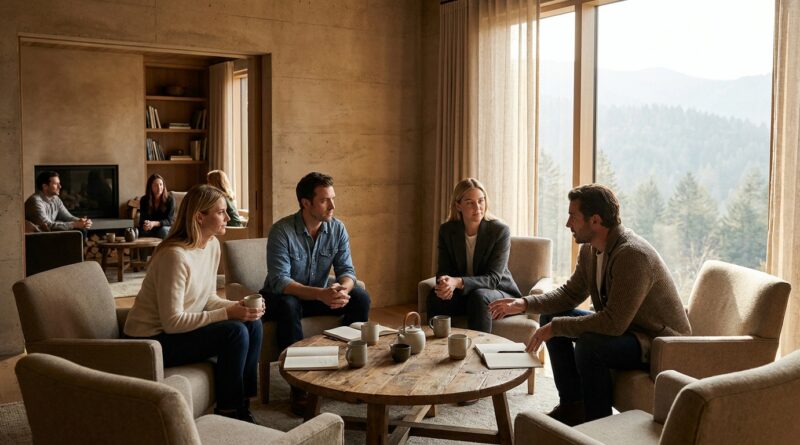
From Offsite To Quiet-Luxury Retreat: Why 2026’s Smartest Teams Now Trade Big Agendas For Small, High-Trust Circles
Most team offsites fail in a very predictable way. They cost a lot, ask people to travel, and then trap everyone in a prettier version of the same meeting they were already tired of. Same big room. Same slides. Same polite comments. Different carpet. If that sounds familiar, your people are not being difficult. They are burned out, more protective of their time, and far less willing to play along with culture theater. What they want now is simpler and more human. Smaller circles. More privacy. Less performance. A quiet luxury corporate retreat small group format works because it trades spectacle for trust. Instead of one giant agenda trying to fix everything, it creates a handful of calm, carefully held conversations where people can finally say what they mean. That is where real alignment on AI, hybrid work, priorities, and team friction actually starts. Not on stage. In small rooms.
⚡ In a Hurry? Key Takeaways
- A quiet luxury retreat works better than a traditional offsite when the goal is trust, candor, and one or two clear decisions.
- Start with groups of 4 to 8 people, fewer sessions, no cameras, and at least one protected block for slow discussion with no slides.
- This format is not about fancy extras. It gets more value from travel spend by lowering social pressure and making honest conversation feel safe.
Why big-agenda offsites are losing people
People can tell when an event is trying too hard.
A packed agenda often looks impressive on paper. Keynote at 9. Breakout at 10. Workshop at 11. Team activity at 1. Strategy wall at 3. Dinner at 7. But inside that schedule, there is very little room to think, question, or speak plainly.
That matters more now than it did five years ago. Post-pandemic teams are carrying more fatigue. Many are also more private. They do not want every thought captured on a shared doc, repeated in Slack, or turned into a slide for the recap deck.
Leaders, meanwhile, still need the retreat to do real work. They need honest input on AI use, hybrid work norms, decision bottlenecks, and where trust is low. The old offsite format is bad at that because people perform in crowds. They open up in smaller circles.
What “quiet luxury” really means in a retreat format
Quiet luxury does not mean gold-plated water bottles or a fancier dessert table.
It means the event feels calm, intentional, and unforced. Good chairs. Soft lighting. Space between sessions. Phones away when possible. No pressure to be “on” every minute. Most of all, it means the design respects people’s nervous systems and attention spans.
That is why the format matters more than the venue. A modest property with great room setup and strong facilitation will beat a five-star hotel running a giant conference agenda every time.
If you have seen teams return from a retreat more drained than when they left, it is worth reading From Offsite To Nervous‑System Retreat: Why 2026’s Smartest Teams Now Design Gatherings To Physically Switch Off Fight‑Or‑Flight. The core idea is simple. People think better when their bodies are not stuck in alert mode.
Why small, high-trust circles work better
People speak more honestly in groups of 4 to 8
In a room of 40, most people self-edit. In a room of 6, they contribute.
That size is large enough for mixed views and small enough for safety. You get fewer speeches and more real sentences like, “I don’t think our AI policy matches how people actually work,” or, “We say hybrid is flexible, but managers are rewarding office visibility.”
There is less status theater
Large offsites often become social ranking machines. Who talks first. Who gets quoted. Who sits near leadership. Small groups lower that temperature. They make room for quieter thinkers, newer staff, and people who need a minute before they jump in.
Decisions get cleaner
A giant agenda usually produces too many outputs. Long lists. Sticky notes. Ideas no one owns. Small-circle formats tend to produce fewer decisions, but better ones. That is the whole point. You do not need 37 insights. You need one or two decisions people will actually carry home and use.
What a quiet luxury corporate retreat small group format looks like in practice
Think less conference, more carefully hosted house gathering.
1. Fewer people per room
Keep core discussion groups to 4 to 8. If the retreat has 40 attendees, split them into several stable circles instead of rotating everyone every hour. Trust builds when people are not constantly reintroduced.
2. One real question per session
Do not ask a group to solve culture, strategy, AI policy, and team cohesion before lunch. Give each session one job. For example:
- What is one rule about hybrid work that is causing hidden frustration?
- Where is AI saving time, and where is it quietly lowering quality?
- What decision are we avoiding because the current process protects comfort?
3. No slides in the most important conversations
Slides push people into presenting. You want them thinking. Save decks for pre-read material or a short framing at the start. Then close the laptop.
4. Protected privacy
This is a big one. No recording. No live-noting on a screen. No pressure to “share out” every vulnerable comment in the full group. You can still capture decisions without exposing every sentence that led there.
5. More blank space than you think you need
Leave room between sessions. Not because it looks nice, but because insight often lands five minutes after the formal discussion ends. The best retreat conversations usually happen on the walk back from the room, over coffee, or while sitting outside with one colleague.
How to design safety without making it feel awkward
Psychological safety is important, but many leaders accidentally make it sound corporate and stiff. Keep it plain.
Start with a few simple rules:
- Speak from your experience, not for your whole department.
- No one is required to perform certainty.
- We can share conclusions later, but not personal comments without permission.
- Silence is allowed. People do not need to fill every gap.
Also, choose facilitators carefully. The best ones are calm, observant, and comfortable with pauses. They do not dominate. They notice who has not spoken. They can gently stop a senior person from turning a circle into their own mini keynote.
What leaders should stop doing right now
Stop treating the offsite like a content machine
If the event exists mainly to produce photos, recap posts, or proof that culture is happening, people will feel it.
Stop over-scheduling every hour
Busy is not the same as useful. A retreat should create depth, not motion.
Stop assuming “bigger” feels more valuable
Bigger rooms, bigger screens, and bigger entertainment can actually make candor worse. For hard topics, intimacy beats scale.
Stop asking for vulnerability without privacy
You cannot ask people to be honest while notifications are buzzing, managers are hovering, and every comment might show up in a summary document.
How event designers and people leaders can make the shift
You do not need a total reinvention. Start with one retreat and change the mix.
Cut the main-stage time in half. Reduce the number of themes. Build the day around small circles with strong prompts. Add one elegant shared meal instead of three “engagement activities.” Put your budget into comfort, acoustics, facilitation, and time protection.
That is the hidden advantage of this format. It is often smarter, not more expensive. You are not buying more tech or more spectacle. You are recutting the retreat so the time away from the desk produces something people can actually use.
At a Glance: Comparison
| Feature/Aspect | Details | Verdict |
|---|---|---|
| Traditional big-agenda offsite | Large room, dense schedule, lots of presentations, broad outcomes, high social performance | Good for announcements, weak for trust and candor |
| Quiet luxury small-group retreat | Small circles, slower pace, low-tech discussion, privacy, fewer but sharper decisions | Best for alignment, sensitive topics, and real relationship repair |
| Budget efficiency | Spends less on showmanship and more on room setup, facilitation, comfort, and protected time | Usually a better return on travel and people time |
Conclusion
The smartest retreat trend for 2026 is not louder, flashier, or more packed. It is quieter. More selective. More human. Post-pandemic, employees are more burned out, more privacy-conscious, and more skeptical of anything that feels like culture theater. At the same time, leaders still need real alignment on AI, hybrid work, and strategy. A quiet luxury corporate retreat small group format solves both problems. It replaces one big, over-programmed stage with many small, high-safety rooms where people can speak candidly, think slowly, and leave with one or two decisions that genuinely shift how they work together. For event designers and people leaders, that is the opportunity. Do not spend more just to impress people. Recut the format so every dollar and every hour away from the desk creates deeper trust, cleaner decisions, and a retreat people quietly talk about for months.