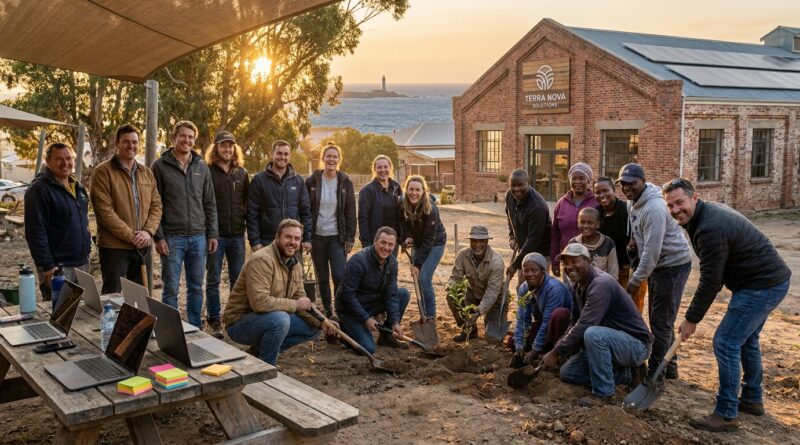
From Offsite To Regenerative-Retreat: Why 2026’s Smartest Teams Now Trade Cookie-Cutter Resorts For Place-Based Impact
People are over the fake magic of the standard company offsite. You know the one. A long flight, a polished resort, a windowless meeting room, and a schedule packed so tight nobody actually connects. Leaders feel the mismatch. Teams feel it even more. After years of remote work, burnout, and endless talk about purpose, employees want proof that company culture is real when money is on the table. That is why regenerative corporate retreat ideas post pandemic are getting serious attention in 2026. The smartest teams are not just asking, “Where can we meet?” They are asking, “Who benefits because we came?” A regenerative retreat is built around place, local partners, and useful impact. It still gives your team strategy time, rest, and face-to-face bonding. But it also leaves something behind that matters. Done well, it feels less like corporate theater and more like a shared experience people will actually talk about afterward.
⚡ In a Hurry? Key Takeaways
- Regenerative retreats beat cookie-cutter offsites because they combine team goals with real local benefit, not just nice scenery.
- Start small. Pick one place-based project, one trusted local partner, and one simple way to measure impact.
- Avoid “voluntourism.” If the local community would not choose the activity without your team there, rethink it.
Why the old offsite model is wearing out
Traditional offsites were built for a different era. Get everyone in one place. Run presentations. Add a dinner and maybe a ropes course. Call it culture.
That formula is not landing the same way anymore. Teams are more distributed. Travel budgets are watched more closely. Employees are quicker to spot when a company says one thing and funds another.
And there is a deeper problem. Anonymous resorts create anonymous memories. If your team could swap the location, the food, and the ballroom for almost any other package and nothing meaningful changes, the retreat probably was not designed with much intention.
What “regenerative” actually means here
Let’s keep this plain. A sustainable retreat tries to reduce harm. A regenerative retreat tries to leave the place better off than before your team arrived.
That can mean restoring habitat, funding local food systems, supporting cultural preservation, booking with community-owned operators, or helping a small destination during shoulder season in a way that locals actually want.
The key is that the place is not just a backdrop. It is part of the retreat design.
Not charity. Not optics. Not a guilt tax.
This is where some leaders get nervous. They imagine a forced volunteer hour where everyone plants three shrubs, takes a photo, and heads back to cocktails. Nobody wants that.
A good regenerative retreat does not tack on “doing good” as a side activity. It connects the work of gathering with the values the company claims to hold. If your company says it cares about community, resilience, health, or stewardship, the retreat should show that in a concrete way.
Why 2026’s smartest teams are making the switch
Three things changed.
1. Employees want proof, not slogans
Post-pandemic teams have sat through enough culture decks. They want to see what the company chooses when no one is forcing it. Retreat spending is one of those moments. A line item can reveal a lot.
2. Smaller teams need retreats that feel worth the spend
If you are a 20-person company, a generic luxury offsite can feel hard to defend. A place-based retreat gives you a clearer story. The budget did not just buy flights and buffets. It bought better connection, useful local partnerships, and measurable results.
3. Local, memorable experiences work better than polished sameness
People remember the morning they learned from a coastal restoration team, the meal prepared with ingredients from the farm they visited, or the workshop led by local craftspeople. They do not remember Ballroom C.
What a regenerative retreat looks like in practice
You do not need a huge events team or a six-figure budget. You need a sharper brief.
Choose a place with a real story
Start with a destination that has community-led projects already in motion. That could be a rewilding program, watershed restoration, Indigenous tourism initiative, urban farming network, or heritage food cooperative.
The best destinations are not blank canvases. They already know what they need.
Build the agenda around that place
Your team still needs strategy sessions, planning time, and rest. Keep those. But shape the rhythm of the retreat around where you are.
Example:
- Morning strategy session on a company challenge.
- Afternoon field visit with a local partner.
- Small-group reflection on what the team noticed about resilience, systems, or trust.
- Dinner with local producers or social enterprise hosts.
Now the retreat has texture. It has context. It feels lived in.
Pay local, not just nearby
This part matters more than many teams realize. Staying at a resort outside town and doing one community activity is not the same as spending with local guides, caterers, makers, transport operators, and venues.
Ask a simple question. How much of our retreat spend remains in the local economy?
Regenerative corporate retreat ideas post pandemic that teams can actually use
Watershed and coastal recovery retreats
Great for teams that want a visible environmental project. Work with scientists, local nonprofits, or community groups on dune restoration, mangrove recovery, river cleanup, or water monitoring.
Best when paired with short education sessions so people understand the “why,” not just the task.
Farm-to-team retreats
Book with regenerative farms, rural inns, or food cooperatives. Add hands-on sessions, shared meals, and workshops on supply chains, soil health, or local resilience.
This works especially well for leadership teams because the conversations tend to get practical fast.
Heritage and culture-led retreats
Partner with local historians, artists, or Indigenous-owned experiences. The point is not to consume culture like entertainment. The point is to learn from people rooted in the place and pay them properly for that expertise.
Urban neighborhood impact retreats
Not every retreat needs mountains and a lake. Smaller companies can stay in a city and still do this well by working with community kitchens, neighborhood nonprofits, repair cafes, maker spaces, or local schools on projects they already need support for.
Skill-share retreats with local exchange
Your team may have useful skills. Design, marketing, IT, logistics, operations. Instead of random volunteering, offer structured sessions requested by local organizations. The important part is that the request comes from them, not from your assumptions.
How to avoid the biggest mistake: performative impact
If there is one trap to avoid, it is this. Doing something that looks meaningful to your team but creates extra work or little value for locals.
Use this quick test
- Was the activity requested by a local partner?
- Would it still be useful if your team never posted about it?
- Are local people being paid fairly for their time and knowledge?
- Can you explain the outcome in one sentence without sounding vague?
If the answer to those questions is fuzzy, keep digging.
How to plan one without a giant events department
This is where many good ideas die. They sound nice, but nobody has time to build them. So keep the model simple.
Step 1: Pick one retreat goal
Do not try to solve everything at once. Choose the main reason the team is gathering. Alignment. Recovery. Onboarding. Annual planning. Trust-building.
Step 2: Match one place-based impact theme
Choose one local thread that fits your company values. Food systems. Water. Housing. Craft. Habitat. Education.
Step 3: Find one anchor partner
This could be a local nonprofit, destination stewardship group, community-owned operator, or a consultant who knows the region well. One good partner is worth more than ten random vendors.
Step 4: Measure three things
Keep the scorecard modest and real:
- Team outcome, such as engagement scores or retention feedback.
- Local economic outcome, such as percentage of spend with local suppliers.
- Place outcome, such as trees restored, meals funded, training hours delivered, or habitat area supported.
Step 5: Tell the story carefully
Share what happened with humility. Focus on the local partner and what the project achieved. Nobody needs a self-congratulatory highlight reel.
Questions to ask before you book anything
- Who designed the impact activity, us or the community?
- What will the team be doing that could not happen in a generic hotel?
- How much downtime is built in, so the retreat does not become another exhausting workweek?
- What part of the budget directly supports local people or projects?
- What will employees remember six months later?
Why this works especially well for hybrid and remote teams
Distributed teams often need more than presentations. They need a reason to be together that feels human. Place-based work gives people something to do side by side, not just something to watch on a screen or from the back of a room.
That matters. Shared physical experiences build trust faster than another slide deck ever will.
At a Glance: Comparison
| Feature/Aspect | Details | Verdict |
|---|---|---|
| Traditional resort offsite | Easy to book, familiar format, but often generic and disconnected from company values. | Fine for convenience, weak for meaning. |
| Regenerative retreat design | Combines team planning, local partnership, and measurable community or environmental benefit. | Best choice for culture proof and lasting memories. |
| Execution for small teams | Works well if you keep it focused on one goal, one partner, and a simple impact scorecard. | Very doable without a giant events department. |
Conclusion
The big shift is not really about travel trends. It is about trust. Post-pandemic teams want evidence that the company they work for means what it says, especially when budgets are tight and every expense gets noticed. A well-designed regenerative retreat turns a line item into a story people are proud to tell. It creates local value instead of empty optics. It gives smaller teams a practical model they can actually pull off. And maybe most important, it makes time together feel honest again. If your next offsite could happen in any beige ballroom on earth, it is probably time to choose a place that matters, and leave it better than you found it.