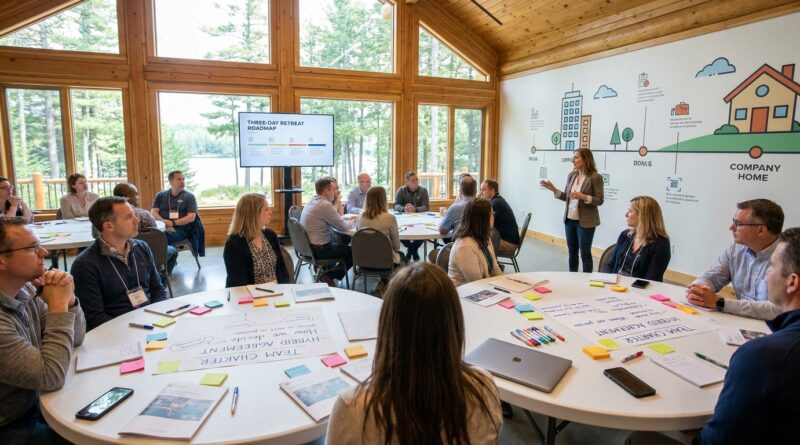
From Offsite To Re-Onboarding Retreat: Why 2026’s Smartest Teams Now Use Gatherings To Rebuild Culture For Hybrid Veterans
Your team is not confused because they are difficult. They are confused because the company many of them joined in 2019, 2021, or even 2023 is not the same company now. Policies changed. Managers changed. Office expectations changed. Somewhere along the way, people were told to “get aligned” through a few slides, a town hall, and a flood of Slack posts. It is no wonder culture feels fuzzy and trust feels thin.
That is why some of the smartest companies are changing what an offsite is for. Instead of treating it like a reward trip or a generic bonding event, they are using it as a re-onboarding retreat. Think of it as a shared reset for hybrid veterans. Not “welcome to the company,” but “here is how this company actually works now.” If you are looking for post pandemic corporate retreat ideas for hybrid culture, this is one of the most practical because it turns culture from a vague slogan into a set of visible habits people can return to on Monday morning.
⚡ In a Hurry? Key Takeaways
- A re-onboarding retreat works best when your hybrid team needs clarity, trust, and shared norms, not just morale.
- Build the agenda around real work questions: when to meet, how decisions get made, what managers owe teams, and which rituals will stick.
- If you skip follow-up, the retreat becomes a nice memory. If you track a few habits after it, it can improve engagement and team performance.
Why the old offsite format is falling short
For years, the standard offsite had a predictable shape. A keynote. A team dinner. Maybe a workshop or trust fall with better catering. That can still be fun, but fun is not the main problem most hybrid teams are trying to solve.
The real issue is this. People are working inside a half-updated operating system. They know the job. They know the tools. What they do not always know is how the company expects work to happen now.
Do you come in for collaboration or visibility? Is Slack for quick updates or actual decisions? Can meetings happen asynchronously first? What does a good manager in a hybrid company owe their people?
If those answers live only in leadership’s head, culture starts to feel uneven. One team has clear norms. Another makes it up as they go. That is where frustration starts.
What a re-onboarding retreat actually is
A re-onboarding retreat is not orientation for new hires. It is a reset for people who have already been through years of change. The goal is to help employees re-learn the company as it exists today, not as it looked before the pandemic or during emergency remote work.
That means the retreat should answer practical questions, not just inspirational ones. What are our shared hybrid rules? What behaviors matter most? Where are we still inconsistent? What needs to change between managers and individual contributors?
In other words, this is less “let’s get away together” and more “let’s rebuild our common playbook together.”
Why this matters in 2026
Hybrid is no longer a temporary arrangement. Most companies have settled into patterns. Midweek office peaks are common. Mondays and Fridays often look different. Some teams are remote-first in practice, even if they are not calling themselves that.
But while work patterns are stabilizing, culture often is not. Leaders keep saying the hardest part of hybrid work is maintaining teamwork, belonging, and trust. That should not be surprising. Productivity can be measured with dashboards. Culture usually cannot, at least not as quickly.
So companies default to what feels easy. A policy memo. A manager toolkit. A “culture week” on Slack. Those things can help, but they rarely create the one thing people really need, a shared moment where expectations become real and discussable.
Signs your team needs a re-onboarding retreat
1. Everyone says “we’re hybrid,” but means something different
If one manager expects three office days, another expects one, and a third quietly rewards whoever shows up most, your problem is not flexibility. It is inconsistency.
2. New hires fit in faster than long-timers
This sounds backward, but it happens. New hires often get the latest pitch about values and work style. Long-time employees may still be operating from rules that no longer exist.
3. Trust in leadership feels thinner than it used to
When leaders say one thing and daily behavior says another, people notice. A retreat gives space to close that gap in plain language.
4. Team connection depends too much on personality
If culture only works because a few strong managers hold it together, it is too fragile. You need team habits that do not depend on one heroic person.
What to put on the agenda
The best post pandemic corporate retreat ideas for hybrid culture are not stuffed with generic inspiration. They are built around decisions and rituals. People should leave knowing what changes now.
Start with “how work works here now”
Open with honesty. What changed over the past few years? What is working? What is still messy? Skip the polished corporate voice. People can tell when a company is dancing around reality.
Spell out the current truth. Why do in-office days exist? Which activities are better face to face? Which ones should stay remote? What tradeoffs has leadership made?
Run manager and IC sessions separately, then together
This matters more than many teams realize. Managers need room to compare notes on what they are being asked to enforce. Individual contributors need room to say what hybrid friction feels like from their side.
Then bring them back together for structured conversation. Not open-mic chaos. Real prompts. For example:
- What does “responsive” mean across time zones and work styles?
- What deserves a meeting versus a document?
- How do we make office days useful instead of symbolic?
- What does fairness look like for people who are remote more often?
Turn values into behaviors
Most teams have values already. Few can point to what those values look like on a Wednesday afternoon.
Take each value and ask, “What behavior proves this in a hybrid workplace?” If one value is transparency, maybe that means decisions are posted in one shared place within 24 hours. If one value is respect, maybe that means no meeting gets scheduled without a written agenda first.
Pick a small number of rituals
This is where many retreats go wrong. They try to fix everything. Do not.
Choose three to five rituals your team will actually use. A weekly async update. A monthly manager-IC expectations check-in. Core collaboration hours. A rule that office days are reserved for work that benefits from being together.
If you want a useful companion read on tightening those practical rules, From Offsite To Alignment Retreat: Why 2026’s Smartest Teams Now Use Gatherings To Fix Their Hybrid Work Rules In 48 Hours makes the case that teams should stop commuting in just to sit through back-to-back video calls.
What people actually want from these gatherings
Most employees do not need one more pep talk about culture. They want fewer mixed signals. They want to know what good work looks like. They want office time to feel worth the trip. They want managers to be consistent.
That is the hidden strength of a re-onboarding retreat. It treats adults like adults. It assumes the issue is not low commitment. It is unclear norms.
When people feel the company has finally said, “Yes, things changed, and here is the updated version,” anxiety drops. So does the endless guesswork.
How to keep it from becoming a feel-good dead end
Write the new norms down before people leave
Not next month. Not after a committee reviews the language. Before everyone goes home, capture the rules, rituals, and promises in one simple document.
Assign owners
Every new ritual should have a person responsible for keeping it alive. If no one owns it, it will vanish as soon as calendars fill up again.
Measure a few things, not everything
You do not need a giant dashboard. Pick a handful of signs that the retreat is changing daily life. For example:
- Manager-employee clarity scores from a pulse survey
- Use of async updates instead of status meetings
- Perceived value of office days
- Cross-team collaboration response times
- Retention risk in key teams
Check back at 30, 60, and 90 days
This is where culture becomes real. A retreat starts the reset. Follow-up keeps it from slipping back into old habits.
Simple retreat format People and Ops leaders can use next quarter
Day 1: Clear the fog
Start with company reality. What changed? What is stable? What hybrid model are we actually running?
Then move into team breakout sessions about friction points. Collect specifics, not vague complaints.
Day 2: Build the new playbook
Bring managers and ICs into guided sessions. Define collaboration norms, communication rules, and what office time is for.
End by choosing a short list of rituals and writing them down.
After the retreat: Make it visible
Share the playbook. Train managers on how to use it. Review it in team meetings. Revisit it quarterly.
If needed, think of this as a culture version update. Not a one-time event. More like installing a cleaner, clearer way of working.
At a Glance: Comparison
| Feature/Aspect | Details | Verdict |
|---|---|---|
| Traditional offsite | Great for morale and social time, but often light on concrete hybrid norms and follow-through. | Helpful, but not enough if culture feels blurry. |
| Re-onboarding retreat | Focuses on trust, clarity, manager-IC expectations, and a shared playbook for how work happens now. | Best choice for teams trying to rebuild hybrid culture. |
| Slack campaigns and policy decks | Cheap and fast, but easy to ignore and hard to turn into real habits without shared discussion. | Useful as support material, not as the main fix. |
Conclusion
Hybrid work is not a trial run anymore. It is the shape of work for many teams, complete with predictable office peaks in the middle of the week and plenty of lingering confusion about how connection and culture are supposed to happen. Leaders already know the hard part is no longer just output. It is teamwork, trust, wellbeing, and retention. Those are business issues, not soft extras.
That is why a re-onboarding retreat makes so much sense right now. Instead of trying to patch culture together through scattered announcements and policy files, it gives people a shared, high-trust reset. It helps them see how the company works today, not how it worked before. Done well, it lets leaders and employees align on hybrid norms, repair the gap between intention and reality, and agree on a few rituals that can survive real schedules.
For People and Ops leaders, that is the opportunity. You do not need a grand reinvention. You need a gathering with a clear job to do. If you run it well, your next retreat will not be a break from work. It will be the starting line for better work.