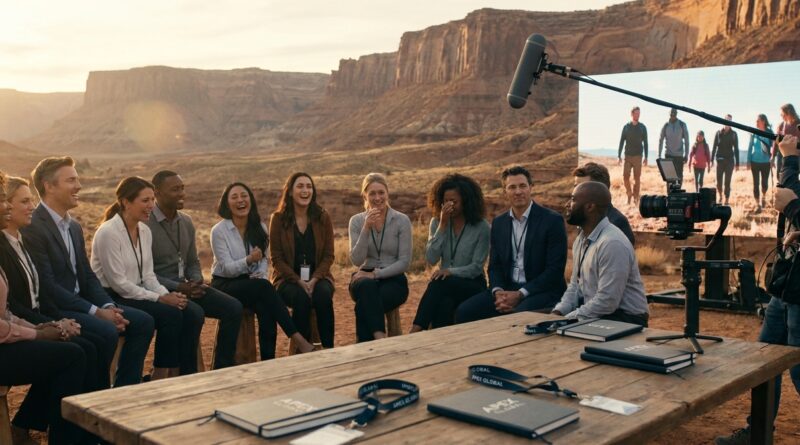
From Offsite To Story-Retreat: Why 2026’s Smartest Teams Now Leave With A Documentary, Not Just A Deck
You can feel the problem as soon as the retreat ends. Everyone flies home tired, your finance team is staring at the bill, and the only “proof” of the week is a messy camera roll, a group photo and a Notion page nobody reads after Monday. That is a rough outcome when a company just spent real money and real attention on getting people together. Leaders want culture impact. Employees want to feel heard. Recruiting wants something human to show candidates. Instead, most teams get a recap deck that dies quietly in Slack. That is why corporate retreat storytelling is getting so much attention in 2026. Smart teams are not treating the retreat as a one-off event anymore. They are treating it as a content engine, a trust builder and a memory system. The goal is simple. Leave with a documentary, a story library and clear evidence that the retreat changed something people can still see months later.
⚡ In a Hurry? Key Takeaways
- Corporate retreat storytelling turns a short event into a year-round asset, not just a one-time expense.
- Plan the retreat like a story project, with interview moments, team reflections, and clear post-event editing goals.
- If you want lasting value, do not rely on random phone clips. Build a system people can actually use later for hiring, onboarding and internal trust.
The old offsite model is starting to look wasteful
For years, the retreat formula barely changed. Book a nice venue. Add strategy sessions. Mix in a workshop, a dinner and maybe a hike. Then send everyone home with a slide deck and the hope that momentum somehow survives.
Sometimes it does. Often, it does not.
The problem is not the retreat itself. The problem is that most companies still treat the gathering as the finish line. It should be the starting point.
When budgets were loose, that was easier to ignore. In 2026, it is not. People leaders, CHROs and Chiefs of Staff are being asked harder questions. What changed? What did we capture? What can we use after the event? How does this help hiring, onboarding or leadership trust?
If the answer is “we had great energy in the room,” that will not hold up for long.
What a story-retreat actually means
A story-retreat is not just filming the event. That is too small a definition.
It means designing the retreat so the most useful human moments are captured on purpose. Not staged. Not fake. Just noticed, recorded and organized well.
That might include:
- Short founder interviews about where the company is going
- Team reflections on what is working and what is hard
- Customer or mission stories that reconnect people to the why
- Cross-functional conversations that show how work actually happens
- Honest clips about lessons learned, not just polished wins
The finished output might be a short documentary, but that is only one piece. The bigger value is the asset library behind it. You now have clips, quotes, team stories, b-roll, leadership soundbites and cultural proof you can use all year.
Why the documentary matters more than the deck
A deck explains. A documentary shows.
That difference matters because people do not remember bullet points very well. They remember faces, emotion, tone and real voices. A five-minute film of your team speaking honestly about what they built, fixed or learned can do more for internal alignment than 40 slides of recap notes.
It also travels better.
A deck stays trapped in a folder. A well-cut story can support recruiting pages, onboarding sessions, all-hands meetings, leadership updates and even investor conversations. It gives the retreat a second life.
This is the core promise of corporate retreat storytelling. You are not just recording memories. You are making evidence.
The best teams are pairing story with a clear outcome
There is another reason this model is taking off. Teams are tired of retreats that feel inspiring in the moment but fuzzy in hindsight.
That is why many organizations are also redesigning the event itself. Instead of trying to do everything, they pick one capability, one shift or one question and build around it. If that idea sounds familiar, it connects nicely with From Offsite To Skill-Sprint Retreat: Why 2026’s Smartest Teams Now Use Gatherings To Build One Game-Changing Capability. The smartest gatherings now create a concrete result and a strong story about how the team got there.
That combination is powerful. You leave with proof of change, and a way to show it.
How to build a retreat people can still feel six months later
Start with a story brief, not just an event agenda
Before anyone books flights, answer a few basic questions.
- What change should this retreat create?
- What do we want people saying after it?
- Who needs to see the output later?
- What stories would be useful for recruiting, onboarding and leadership communication?
This sounds simple, but it changes everything. You stop gathering random footage and start collecting material with a job to do.
Choose three or four story themes
Too many themes and you get mush. Too few and it feels thin.
Most teams do well with a short list like this:
- Why we are here now
- What we are building next
- How our people work together
- What we learned by getting in the same room
Those themes become the spine of the documentary and the wider content library.
Capture real voices, not just polished speakers
The CEO matters, of course. But the retreat should not sound like one long leadership monologue.
Some of the most valuable footage often comes from managers, new hires, long-time operators and quiet high performers. They make the culture believable. They also help employees feel seen, which is one of the biggest complaints after many offsites. People attend, but they do not feel reflected.
A good story-led retreat fixes that.
Build in reflection windows
If the agenda is packed from breakfast to late-night drinks, you miss the best material.
Leave room for short recorded reflections. Ten minutes after a workshop. A quick pair interview after a strategy session. A small circle at the end of the day asking, “What landed for you?”
These do not need to feel corporate. In fact, they work better when they do not.
Do not make the content team invisible
If you want a documentary, plan for it properly. That may mean bringing in a small production crew, an interviewer, a story producer or a communications lead who knows what to look for.
Relying on “someone from marketing” to grab clips between sessions is how you end up with shaky phone footage and no usable narrative.
People spend six figures on the retreat, then try to save pennies on the part that preserves the value. That is backwards.
What you should leave with besides the film
The documentary is the headline item, but the side benefits are often even more useful.
A hiring story library
Candidates want to know what the company feels like, not just what it claims in a careers page. Real retreat footage can show team chemistry, leadership style and mission clarity in a way stock brand videos never can.
Better onboarding material
New hires who missed the retreat can still absorb the message. They can watch the documentary, hear the company language and understand what mattered in that moment.
Leadership trust assets
Employees are more likely to believe what leaders say when they hear it in context, with other people in the room, attached to real discussion and follow-through.
Internal communication fuel
One retreat can produce dozens of usable pieces. Short clips for Slack. Team spotlights for newsletters. Quotes for all-hands. Snippets for manager training. The event keeps working long after everyone gets home.
Proof for budget conversations
When next year’s planning starts, you are not arguing from memory. You can show what was created, where it was used and how it supported multiple teams.
Common mistakes that quietly ruin corporate retreat storytelling
Mistake 1: Treating story as an afterthought
If you only start thinking about content on day two, you are already behind.
Mistake 2: Forcing fake emotion
People can smell staged culture from a mile away. Do not script every answer. Give people prompts, not speeches.
Mistake 3: Capturing everything and organizing nothing
More footage is not the same as more value. If the assets are not tagged, edited and stored properly, they disappear into digital clutter.
Mistake 4: Making one hero video and stopping there
The film is important. The library is what pays off for months. Plan for both.
Mistake 5: Forgetting consent and comfort
Not everyone wants to be filmed the same way. Set expectations early. Make opt-outs easy. Tell people what the footage is for. Good storytelling should build trust, not chip away at it.
How to measure whether it worked
You do not need a perfect formula, but you do need something better than “people seemed happy.”
Useful signals include:
- How often the retreat assets were used across teams
- Whether onboarding content improved understanding or speed to ramp
- Whether recruiting teams used clips or stories in candidate outreach
- Employee feedback on feeling represented and connected
- Leadership feedback on whether the retreat message stayed alive longer
These are practical markers. They help prove that the retreat was not just a mood boost. It created working material.
At a Glance: Comparison
| Feature/Aspect | Details | Verdict |
|---|---|---|
| Traditional offsite recap | Usually ends in a slide deck, scattered notes and a few casual photos with little long-term use. | Fine for record-keeping, weak for lasting impact. |
| Story-led retreat output | Creates a documentary plus reusable clips, quotes and culture assets for multiple teams. | Best choice when leadership wants clear value after the event. |
| Return on retreat spend | A story library can support hiring, onboarding, internal trust and brand work for the next twelve months. | Much stronger long-tail return than a one-and-done gathering. |
Conclusion
Corporate events are bigger than ever again, and leadership teams are finally treating retreats as serious investments, not perks. That changes the standard. CHROs, Chiefs of Staff and People leaders are now expected to show long-tail value, not just good vibes and a nice dinner photo. That is why corporate retreat storytelling matters. A story-led retreat helps you turn a few intense days into a living asset library that can support hiring, onboarding, brand, investor decks and internal trust for the next twelve months. More importantly, it gives people evidence that the time together meant something. In a year when budgets are under a microscope and teams are tired of forgettable offsites, that is not a luxury. It is smart planning.