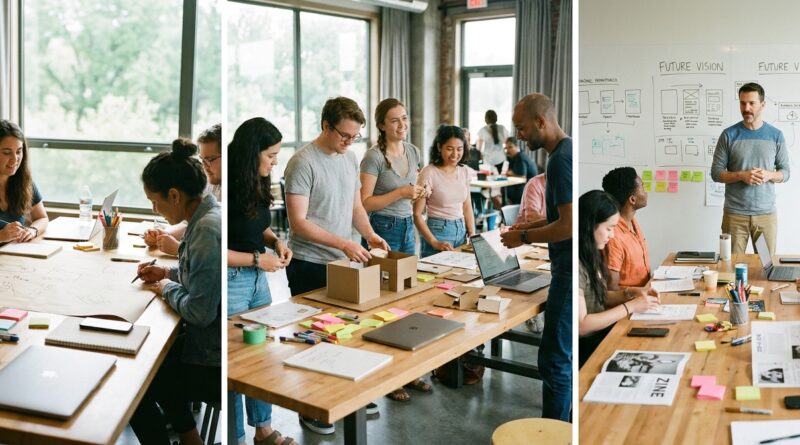
From Offsite To Creative Lab Retreat: Why 2026’s Smartest Teams Now Use Maker Time To Fix Hybrid Disconnection
Your team is probably done with forced fun. They do not need another retreat built around icebreakers, trust falls, and a keynote in a room with bad coffee and worse Wi-Fi. What many hybrid teams actually miss is simpler than that. They miss making something together. Not talking about collaboration. Doing it. That shift is why creative corporate retreat ideas for hybrid teams are catching on fast in 2026. A few hours in a maker-style session can do more for connection than a full day of slide decks, because people relax when their hands are busy and the pressure to “perform culture” drops. You get real conversations, shared problem-solving, and often something useful at the end, whether that is a prototype, a team ritual, a story bank, or a physical reminder of the day. For teams feeling stretched across Zoom rooms, time zones, and uneven office access, maker time gives people a way back to each other that feels human.
⚡ In a Hurry? Key Takeaways
- Creative retreat sessions work because they replace passive listening with shared making, which helps hybrid teams reconnect faster.
- Start with a simple two to three hour maker block tied to a real team brief, like onboarding, customer pain points, or better meeting habits.
- You do not need a huge budget or fancy venue. Clear structure, accessible materials, and inclusive activities matter more than production value.
Why traditional offsites are falling flat
There is nothing wrong with getting people in one place. The problem is what happens once they get there.
Too many retreats still assume that if you fly everyone in, book a nice venue, and run a few bonding exercises, trust will magically appear. It does not. Hybrid work changed the social fabric of teams. Some people are seen more. Some get left out of hallway chats. Some know each other only as tiny rectangles on a screen.
That is why smart planners are moving beyond generic team spirit. If you read From Offsite To Trust-Reset Retreat: Why 2026’s Smartest Teams Now Use Offsites To Fix Hybrid Inequity, Not Just ‘Team Spirit’, the point is clear. The best gatherings now repair what hybrid work strained. Creative maker time fits that mission well because it gives everyone a role, not just the loudest people in the room.
What “maker time” actually means at a retreat
This is not about turning your finance team into pottery artists for the afternoon. It is about giving people a hands-on challenge with a useful outcome.
Maker time can include low-tech, mid-tech, or no-tech activities. The key is that teams build, sketch, test, sort, model, or assemble something together.
Examples that work well
Here are a few creative corporate retreat ideas for hybrid teams that are practical, not cheesy:
- Build the ideal hybrid workday using physical cards, sticky notes, and timeline boards.
- Create customer journey prototypes with paper, Lego, clay, or whiteboard kits.
- Design a team playbook zine with simple templates, markers, and printed prompts.
- Make short audio or video stories about wins, lessons, and team rituals worth keeping.
- Prototype better onboarding packs for new hires who may never meet everyone in person.
- Run a “fix one friction” lab where small groups redesign one annoying internal process.
Notice the pattern. These activities are playful, but they are not pointless.
Why this works better for hybrid teams
When people make something together, a few good things happen at once.
It lowers social pressure
Not everyone likes speaking up in a big group. But give people materials, a clear task, and a shared goal, and quieter voices often come through. The object in front of them does some of the social heavy lifting.
It creates equal footing
Titles matter less when a group is shaping cardboard, arranging ideas on a wall, or testing a rough prototype. You get fewer polished speeches and more honest contributions.
It produces memory, not just minutes
People rarely remember slide 18 from the strategy deck. They do remember the scrappy model their team built in 25 minutes and the laugh they had while fixing it. That memory sticks, and so does the relationship.
It gives you take-home value
A good maker session produces outputs you can use later. Team norms. Visual artifacts. Story prompts. Prototype ideas. Better meeting rules. These are not just nice souvenirs. They are working tools.
How to plan a creative lab retreat without making it feel childish
This is where some planners get nervous. They worry adults will roll their eyes.
That usually happens only when the activity feels random, over-explained, or disconnected from real work. The fix is simple. Give the session a proper brief.
Use this easy planning formula
Start with one real problem. Example: “Our hybrid onboarding feels uneven depending on location.”
Pick one output. Example: “Each group creates a prototype for a better first-week experience.”
Set a short time frame. Ninety minutes to three hours is usually enough.
Keep materials simple. Paper, markers, tape, printed templates, craft supplies, or collaborative digital boards for remote add-ons.
End with a share-out. Not a formal presentation. More like a gallery walk or short demo.
That structure keeps the energy up and the cringe level down.
Best formats for mixed in-person and remote teams
If part of your group is remote, you need to think a little harder. Hybrid can easily become “people in the room do the fun stuff while remote folks watch.” That is exactly what you want to avoid.
Option 1: Parallel maker kits
Ship simple kits to remote attendees in advance. Match the supplies used on site. Then group people into mixed teams with a digital facilitator or shared camera setup.
Option 2: In-person build, remote direct
Pair remote participants with in-room partners. The remote person acts as strategist, editor, or tester while the in-room person handles physical materials.
Option 3: Fully shared digital artifact
If physical making is too awkward, use collaborative whiteboards, storyboarding tools, or low-code prototyping platforms. The point is still making, just in a different medium.
Whichever route you choose, test the setup first. Bad audio can ruin a thoughtful format faster than any weak agenda.
Five retreat themes that fit 2026 team culture
1. Repair the hybrid experience
Ask groups to redesign one part of work that feels unfair or messy across locations. Meetings. promotions. onboarding. access to information. This is useful and honest.
2. Build the team manual you wish existed
Have teams create a visual guide to how they actually work best. Not the official values poster. The real thing.
3. Customer empathy studio
Use personas, journey maps, mock service moments, and quick prototypes to help teams reconnect with end users.
4. Future ritual lab
Design small repeatable rituals the team can bring home. Monday kickoffs. win-sharing. decision logs. quiet focus blocks. celebration habits.
5. Story capture workshop
Let people create short stories about mistakes, saves, customer moments, or proud work. Great for culture, recruiting, and internal knowledge sharing.
What to budget for, and what not to overspend on
The good news is that this trend is more about intention than luxury.
Worth paying for
- A skilled facilitator who can keep the session moving
- Accessible materials and clear printed prompts
- Good room layout with tables, wall space, and decent acoustics
- Photo capture so outputs do not disappear after the event
Usually not worth paying for
- Overly branded props that feel corporate and stiff
- Complicated tech no one knows how to use
- Fancy venue extras that eat the workshop budget
- Long lecture blocks before the activity starts
If money is tight, cut spectacle before you cut participation.
Common mistakes to avoid
Do not make it feel like school
People do not want a craft lesson. They want a challenge with a clear point.
Do not force personal sharing
Making things together builds connection naturally. You do not need a deep vulnerability circle at 9 a.m.
Do not confuse activity with outcome
If the session ends with a mess of sticky notes and no next step, people will see it as fluff. Capture outputs. Assign owners. Follow up.
Do not leave remote people as spectators
This is the fastest way to reinforce the very hybrid disconnection you are trying to fix.
How to measure whether it worked
You do not need a giant analytics stack. A few simple checks will tell you plenty.
- Did every group produce something tangible?
- Did people from different functions actually work together?
- Did quieter team members contribute more than they usually do?
- Did at least one output get used after the retreat?
- Did people mention the session weeks later without being prompted?
That last one matters. If people keep referring back to what they made, you created something real.
At a Glance: Comparison
| Feature/Aspect | Details | Verdict |
|---|---|---|
| Traditional offsite agenda | Usually heavy on presentations, light on participation, and often forgettable for hybrid teams. | Fine for updates, weak for real reconnection. |
| Creative maker session | Hands-on, collaborative, and built around a shared output such as a prototype, process fix, or team ritual. | Best choice for bonding plus usable outcomes. |
| Budget and setup | Needs facilitation, materials, and inclusion planning, but not a huge production footprint. | High return for modest spend if the brief is clear. |
Conclusion
Creative retreats are taking off in 2026 for a reason. People are tired, over-screened, and not fooled by another polished agenda pretending to fix disconnection. A few focused hours of maker time can reset the mood in a way lectures cannot. It gives teams the mental break of play, the connection of solving something together, and the business benefit of ideas and rituals they can actually bring home. That makes this one of the smartest creative corporate retreat ideas for hybrid teams right now. You do not need a luxury resort, a giant stage, or a trendy AI demo. You need a clear brief, simple materials, and room for people to make something that matters.