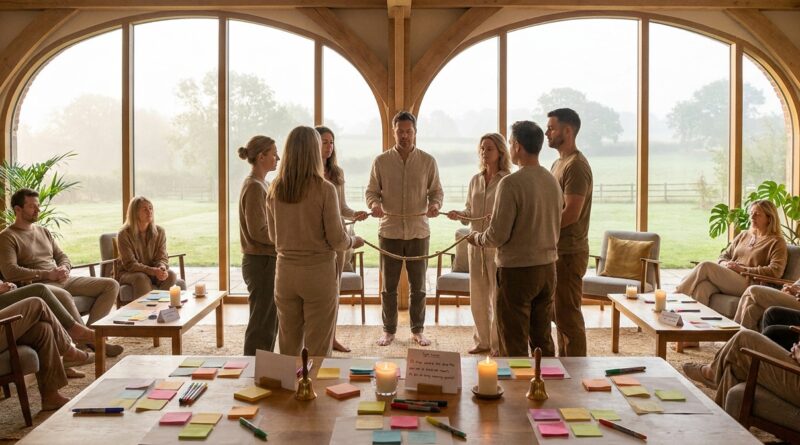
From Offsite To Micro-Ritual Retreat: Why 2026’s Smartest Teams Now Design ‘Mini Moments’ That Last All Year
Leaders are worn out by the same old offsite pattern. You spend months planning it, fly everyone in, pack the agenda, take the smiling team photo, then watch the energy vanish by Tuesday. That is the real frustration. The retreat feels important in the moment, but strangely absent the rest of the year. For teams looking for post pandemic corporate retreat ideas that last all year, the smartest shift in 2026 is not making the event bigger. It is making it stickier.
That is where the micro-ritual retreat comes in. Instead of treating the offsite as a one-time burst of inspiration, companies now use it as a design lab for tiny repeatable habits. Think one shared question at the start of Monday standup. A fast Friday check-out. A simple manager story circle once a quarter. These are small enough to survive busy calendars, hybrid work, and budget pressure. More important, they give the retreat an afterlife. People do not just remember the event. They keep using what they built there.
⚡ In a Hurry? Key Takeaways
- Smart teams now design retreats around small repeatable rituals, not one-time inspiration.
- Start with 2 to 4 habits your team can actually use in weekly or quarterly routines.
- This approach cuts waste, stretches retreat budgets, and gives leaders something measurable after the event.
Why the big offsite is losing its shine
The old model had a simple promise. Get everyone together, reset the culture, align on strategy, and send people home energized. Sometimes it worked. Often, it did not.
The problem is not that gathering in person is bad. It is that one intense burst rarely survives real work. Hybrid teams go back to different time zones, full calendars, and inbox fires. The retreat becomes a memory instead of a system.
That is why more organizers are moving away from spectacle. They still want people together. They just want a better return from that time together.
What a micro-ritual retreat actually is
A micro-ritual retreat is built around one practical question. What small behavior can this team repeat after the retreat without needing a committee, a consultant, or a six-page playbook?
That changes the whole event design.
Instead of this
Three days of presentations, panels, icebreakers, and one emotional closing session.
You get this
Hands-on sessions where teams test short habits they can carry into everyday work. The goal is not just insight. The goal is repeatable behavior.
Examples are refreshingly simple:
- A 10-minute Monday question for a product team, such as “What is one thing we learned last week that should change this week?”
- A two-line sales team check-out before logging off, like “What moved today?” and “Where do I need help?”
- A quarterly manager story circle where leaders share one tough call and one lesson.
These are not flashy. That is the point. If it is too complex, it dies the minute people get busy.
Why this works better for hybrid teams
Hybrid work exposed a basic truth. Most teams do not need more slogans. They need more shared rhythms.
Micro-rituals create those rhythms. They give people predictable moments of connection without forcing a giant process change. That matters when half the team is remote, three people are traveling, and everyone is trying to protect focus time.
They also lower the social pressure. Not everyone wants a retreat that feels like summer camp for adults. A short, useful ritual is easier to adopt than a grand culture initiative.
From event planning to habit design
This is the mental shift many leaders miss. A retreat is no longer just an event to host. It is a place to prototype habits.
If that sounds familiar, it overlaps with another smart trend. In From Offsite To Co‑Created Story Retreat: Why 2026’s Smartest Teams Now Turn Company Strategy Into Live Experiences, the focus is on making strategy something people help build, not just hear about. The micro-ritual version takes that one step further. It asks, what will people still be doing six months later?
How to build a retreat that lasts all year
1. Pick real friction, not abstract goals
Do not start with “improve collaboration.” Start with the pain people actually feel.
- Meetings start cold and awkward.
- Managers avoid honest peer learning.
- Sales and product teams end the week with different priorities.
A good ritual solves one of those problems in a small, repeatable way.
2. Keep the ritual tiny
If it needs training, extra software, or a long explanation, it is probably too big. Aim for habits that fit into 2 to 10 minutes.
Small rituals spread because they are easy to remember and hard to resist.
3. Design it with the team in the room
Do not hand people a finished routine and expect buy-in. Let each team shape the wording, timing, and use case.
That co-creation matters. People are more likely to keep a ritual they helped make.
4. Test it during the retreat
Run the ritual live. Adjust it. Make it less clunky. This is where many retreats fail. They announce a new habit but never rehearse it.
A ritual should feel natural before people leave the venue.
5. Assign a simple owner
Every ritual needs one person or one team to keep it alive for the first 60 to 90 days. Not as a boss. More like a gardener.
The owner’s job is to prompt, notice, and trim.
6. Measure use, not just feelings
Executives are rightly asking if gatherings are worth the money, travel, and emissions. So give them proof.
Track things like:
- How many teams still use the ritual after 30, 60, and 90 days
- Whether meeting time got shorter or clearer
- Whether cross-team blockers are raised earlier
- Whether managers report better consistency in team check-ins
This is where the “afterlife” of the retreat becomes visible.
What organizers should stop doing
Some old habits are hard to quit. If you want post pandemic corporate retreat ideas that last all year, it helps to cut a few things.
Stop overloading the agenda
People do not need 14 sessions. They need enough breathing room to make and test a few habits that matter.
Stop chasing novelty for its own sake
A dramatic keynote or extreme group activity might be fun. It rarely changes Tuesday morning behavior.
Stop calling everything a ritual
A ritual is not just any recurring meeting. It needs a purpose, a shape, and a human reason to exist.
Good examples of micro-rituals by team type
Product teams
Start weekly standups with one shared customer signal. End sprint review with one sentence on what surprised the team.
Sales teams
Use a two-line end-of-day check-out in Slack or Teams. One win. One stuck point.
Leadership teams
Open monthly meetings with a five-minute “what are we not saying yet?” round.
Managers
Run a quarterly story circle focused on one tough people decision and what it taught them.
Cross-functional groups
Use a rotating Monday question that helps teams surface risks early, before they become blame-fests later.
How to know if a ritual is worth keeping
A good micro-ritual passes a simple test.
- People can explain it in one sentence.
- It takes little time.
- It solves a real recurring problem.
- Teams still use it when nobody is policing it.
If it feels forced after a month, change it. These are tools, not sacred objects.
At a Glance: Comparison
| Feature/Aspect | Details | Verdict |
|---|---|---|
| Traditional offsite | High energy for a few days, often weak follow-through once people return to normal schedules. | Good for bonding, weaker for lasting behavior change. |
| Micro-ritual retreat | Uses in-person time to create small repeatable habits teams can use weekly or quarterly. | Best choice if you need year-round impact from one gathering. |
| Measurement and ROI | Tracks adoption, consistency, and work quality after the retreat, not just attendee satisfaction. | Stronger case for budgets, board updates, and future planning. |
Conclusion
There is a reason this idea is catching on. Budgets are tight, hybrid calendars are messy, and leaders have to show that bringing people together is worth the carbon, cost, and time away from work. The answer is not always a bigger event. Often, it is a smarter one. When a retreat becomes a workshop for building micro-rituals that fit your company, the value keeps showing up long after checkout. Maybe it is the 10-minute Monday question your product pod uses all year. Maybe it is the two-line sales check-out before people log off. Maybe it is the quarterly story circle your managers rely on when things get hard. That is the real win. You are not just buying three memorable days. You are building habits with an afterlife you can actually see, use, and point to in reviews and board decks.