From Offsite To Regenerative-Retreat: Why 2026’s Smartest Teams Now Leave Destinations Better Than They Found Them
Planning a team offsite can feel weirdly harder than it should. Every brochure promises “authentic experiences,” but somehow it still ends up looking like the same old formula. Fancy resort. Big buffet. A panel nobody remembers. Maybe some golf for people who did not ask for golf. If your team cares about climate, local impact, and whether a venue actually lives up to its green claims, that old playbook is starting to look tired fast. That is where the regenerative corporate retreat comes in. The idea is simple. Do not just reduce harm. Leave the place, and the people connected to it, better off because your team came. Done right, this is not a guilt trip wrapped in linen napkins. It is a smarter way to plan. You cut waste, create better stories, and give your people an offsite they can feel good about before, during, and after the flight home.
⚡ In a Hurry? Key Takeaways
- A regenerative corporate retreat goes beyond “less bad” travel and aims to create a positive local, environmental, and team impact.
- Start by asking venues for proof, not promises. Request sourcing, waste, labor, transport, and community partnership details in writing.
- This is not just about ethics. It can protect budget, improve employee buy-in, and reduce the risk of greenwashing backlash.
Why the old offsite model is wearing thin
A lot of corporate retreats still run on autopilot. Book a nice place. Add some team building. Sprinkle in local flavor. Hope for the best.
The problem is that employees are paying closer attention now. They notice when a hotel talks about sustainability while flying in bottled water and serving food shipped halfway around the world. They notice when a “community activity” is really just a photo op. And they notice when leadership says culture matters, but the retreat feels designed for a travel brochure instead of real humans.
That is one reason the regenerative corporate retreat is gaining ground. It answers a basic question many planners now face. If we are taking dozens or hundreds of people somewhere, what are we actually leaving behind besides receipts and laundry?
What “regenerative” really means, in plain English
Sustainable travel usually means reducing damage. Use less energy. Create less waste. Buy less plastic. That matters.
Regenerative travel goes a step further. It asks whether your retreat can actively improve the destination in some way. That might mean supporting local suppliers with fair contracts, funding restoration work, helping preserve culture, or designing experiences that create lasting benefit instead of short-term extraction.
Think of it like the difference between borrowing a friend’s car and returning it with the same fuel level, versus returning it washed, topped up, and with the tire pressure fixed too.
What it looks like in practice
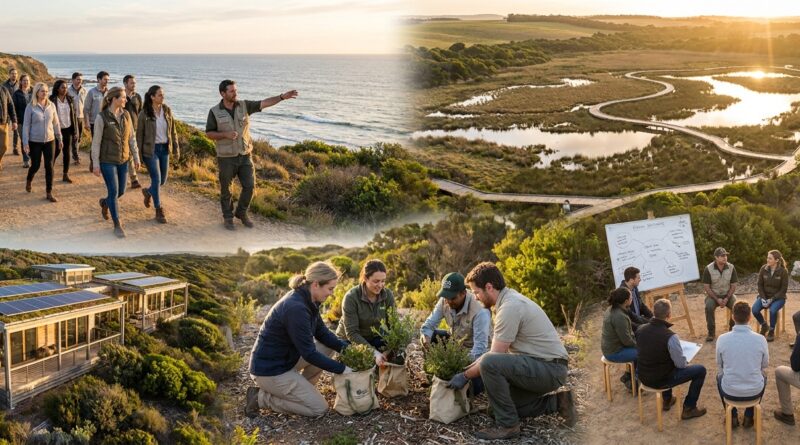
A regenerative corporate retreat might include:
- Using locally owned venues, guides, and caterers where possible
- Choosing places with year-round environmental programs, not one-off guest activities
- Paying for habitat restoration, marine protection, or land stewardship tied to the destination
- Building volunteer or learning sessions with local groups, if they actually want that involvement
- Cutting overbuilt extras that burn budget and resources without adding much value
The key is intent plus evidence. Nice wording on a website does not count on its own.
Why smart teams are moving this way in 2026
Part of this shift is values. People want work travel to line up with what the company says about responsibility and culture.
Part of it is optics. A flashy junket can land badly, both inside the company and outside it. Staff may feel awkward posting about it. Candidates may see it as tone deaf. Clients may question the message.
And part of it is simply better planning. When you strip out wasteful status signals and focus on what people will actually remember, retreats often get stronger. More useful sessions. Better food. Better stories. Less nonsense.
This also fits neatly with a broader trend toward more intentional retreat design. If you have not read From Offsite To Purpose-Built Retreat: Why 2026’s Smartest Teams Now Co‑Design The Agenda With Their People, it is worth a look. The best regenerative retreats are rarely imposed from the top down. They are shaped around what the team actually values and needs.
How to spot real regenerative practice versus polished green marketing
This is where many planners get stuck. A venue says all the right things. Refillable toiletries. Organic garden. Recycled paper straws. Fine. But that does not tell you much.
Ask these questions before you sign anything
- Who owns the property, and how much spending stays in the local economy?
- What percentage of food is sourced locally and seasonally?
- How is waste measured, reduced, and diverted?
- What energy and water systems are in place, and do they have recent reporting?
- How are staff paid and trained?
- What long-term partnerships exist with community groups or conservation projects?
- Can they show outcomes, not just activities?
If the answers are vague, generic, or hidden behind buzzwords, keep digging.
Watch for these red flags
- One token beach cleanup used to justify an otherwise high-waste event
- Imported luxury touches that undermine local sourcing claims
- Community visits that feel staged or intrusive
- No data on waste, labor practices, or supply chain choices
- Sustainability language that is all about the guest experience and not the local benefit
How to plan a regenerative corporate retreat without making it feel preachy
This is important. Nobody wants to be trapped in a three-day moral lecture with tote bags.
The best retreats do not force meaning. They build it in quietly and clearly. Good food from nearby producers tastes better. Smaller groups with local experts feel more personal. A restoration project tied to the landscape gives people something real to remember. You do not have to oversell it.
Start with the retreat goal, not the destination
Ask what this offsite is for. Trust building. Strategy reset. Leadership alignment. Burnout recovery. Cross-functional problem solving.
Once that is clear, choose the place and the regenerative elements that support the goal. A team that needs deep thinking may benefit more from a slower rural setting with local food and guided nature time than from a packed resort itinerary.
Keep the agenda human
Leave breathing room. Build in reflective time. Use fewer but better sessions. Let the destination teach something instead of treating it like wallpaper behind a keynote.
If your team had little say in past retreats, co-design can help a lot. Again, that is why the ideas in From Offsite To Purpose-Built Retreat: Why 2026’s Smartest Teams Now Co‑Design The Agenda With Their People fit so well here. People support what they helped shape.
Where the budget win comes from
Some planners hear “regenerative” and assume “more expensive.” Not always.
Yes, some high-end properties charge a premium. But many retreat budgets are already bloated by things people barely value. Branded swag. Long transfer chains. Oversized menus. Energy-heavy entertainment. Rooms and add-ons chosen for status rather than purpose.
Cut those, and you often free up money for things that matter more. Better facilitation. Fewer flights. Longer stays in one place. Higher quality local partners. Better ground transport planning. Real impact work.
Low-waste choices that often save money
- Replacing disposable items with refill and reuse systems
- Serving seasonal local menus instead of imported prestige ingredients
- Reducing unnecessary merch and printed materials
- Choosing one strong evening experience instead of three forgettable ones
- Booking closer-to-home destinations to cut flight costs and emissions
What employees actually get out of it
A good regenerative corporate retreat does not just make the company look thoughtful. It changes how the event feels.
People tend to respond well when the retreat feels grounded, honest, and connected to place. They remember the guide whose family has worked that land for generations. They remember the meal that came from nearby farms. They remember contributing to something that will still matter next season.
That creates a very different emotional footprint from a standard luxury trip. Less awkwardness. More pride. More willingness to share the experience with others.
How to pitch it internally if leadership only hears “nice resort”
Keep it practical.
- Frame it as risk reduction. Less greenwashing exposure, less internal pushback, fewer wasteful optics.
- Frame it as employer brand. Candidates and staff notice when company actions match company values.
- Frame it as efficiency. Spend more on what supports outcomes, less on filler.
- Frame it as experience quality. Meaningful retreats tend to be more memorable and better attended.
If needed, use a simple test. Ask leadership which retreat is easier for employees to talk about proudly on Monday morning. The one with a generic luxury package, or the one that strengthened the team and left a positive mark on the place that hosted them?
At a Glance: Comparison
| Feature/Aspect | Details | Verdict |
|---|---|---|
| Traditional offsite | Often built around generic luxury, packed schedules, and high-consumption extras with limited local benefit | Easy to book, but increasingly dated and risky from a culture and optics point of view |
| Sustainable retreat | Focuses on reducing harm through lower waste, better sourcing, and smarter operations | A good baseline, but may not create much lasting local value on its own |
| Regenerative corporate retreat | Designed to improve the destination and deepen team meaning through measurable community and environmental contribution | Best long-term choice for teams that want impact, credibility, and a more memorable retreat |
Conclusion
The old offsite formula is not dead, but it is starting to feel lazy. A regenerative corporate retreat gives planners a better answer to a harder question. How do we bring people together without wasting money, draining resources, or sending the wrong message? The good news is that regenerative travel is no longer a fringe idea. It is moving into the center of luxury and corporate hospitality because people want low-impact, high-meaning experiences, not status trips dressed up as culture. For retreat planners, that is a rare win-win. You can stand out as an employer, trim pointless spending, and give your team a story they are proud to tell instead of a junket they feel awkward posting about. Teams that start making this shift now will be ahead of the curve, while everyone else is still congratulating themselves for replacing plastic water bottles with glass carafes.